
Why the First AI Tool to Win a Bett SEND Award Is Against AI Summaries
Feb 16, 2026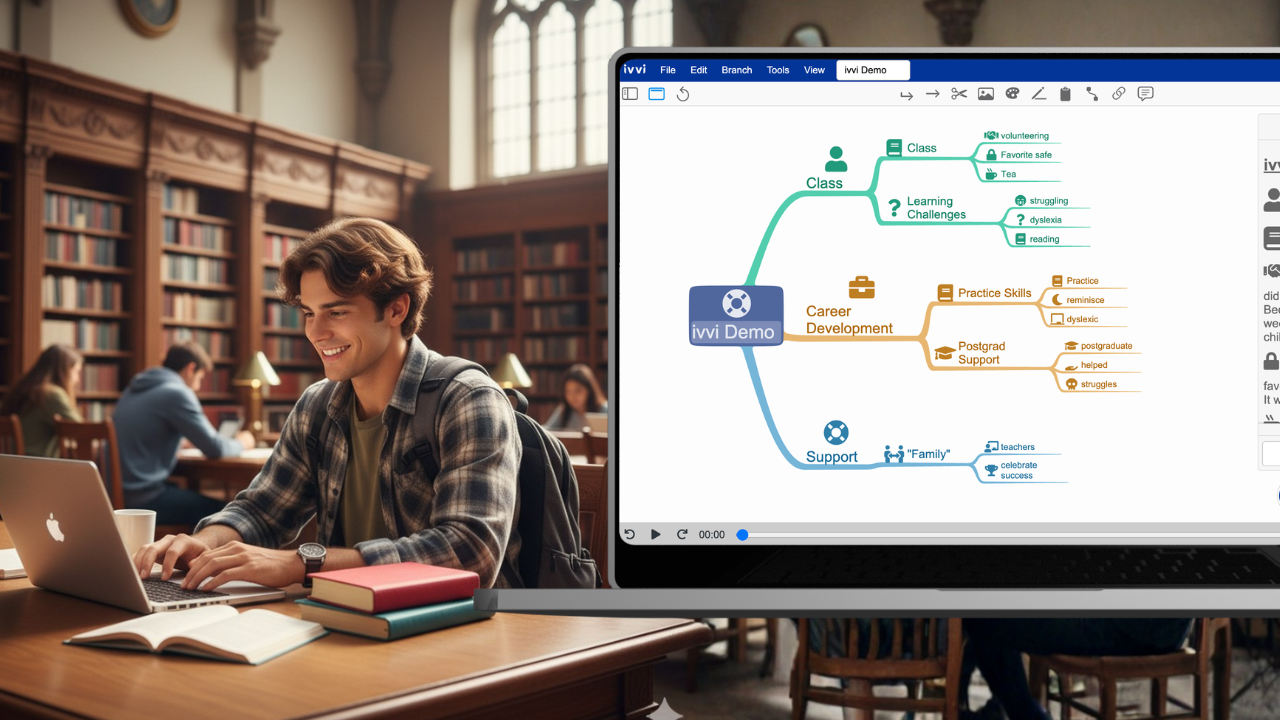
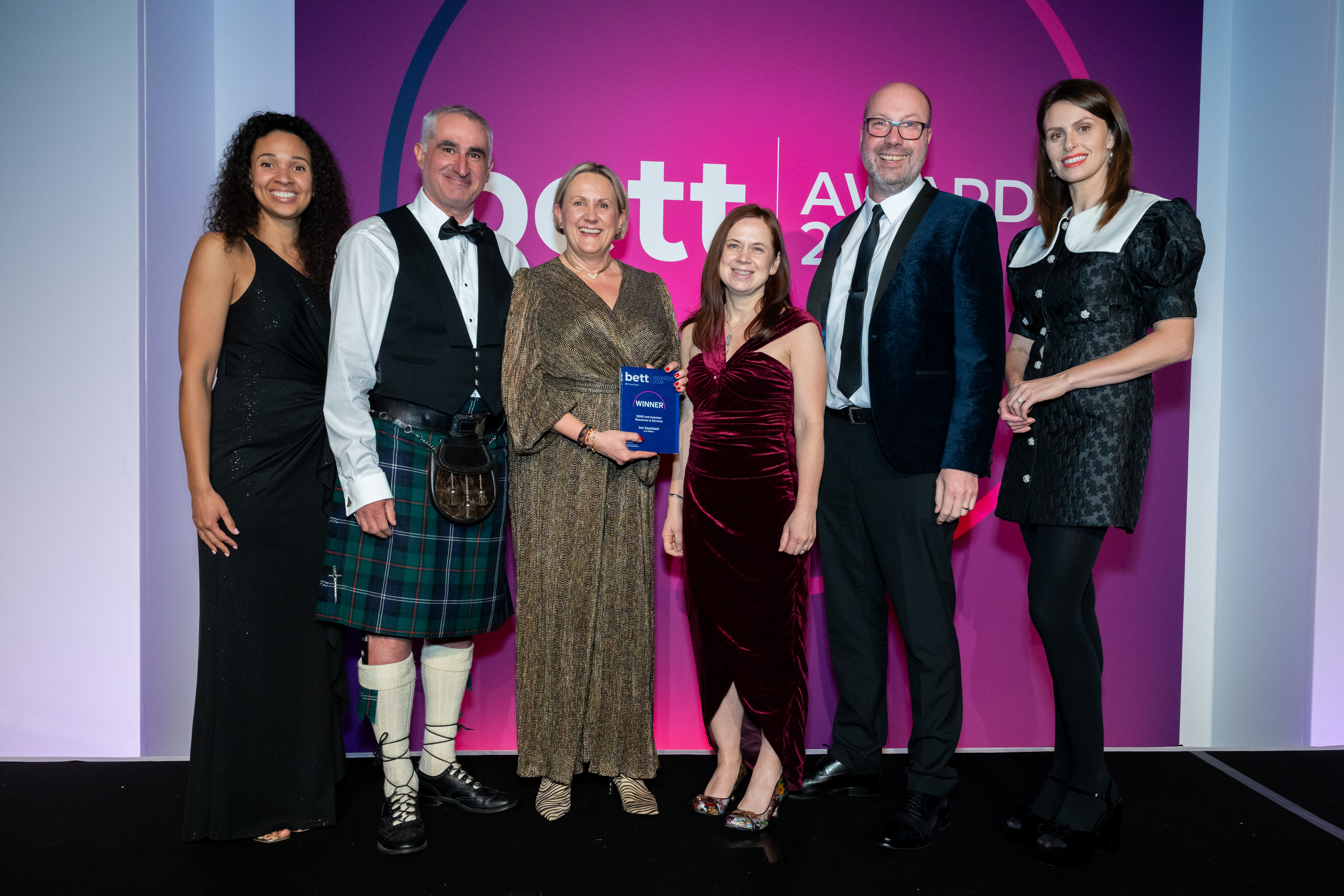
The day ivvi won the 2026 Bett Award for SEND & Inclusion, the Education Secretary opened the Bett conference and announced the government's new AI safety standards for schools.
She said something that stopped me in my tracks:
"AI must be about helping children rise to the challenge of learning. Not spoon feeding them the cold mush of easy answers. Not a shortcut. But figuring things out first, often getting it wrong first. Then with the right feedback and support, thinking it through, working hard, getting it right."
When I heard that, I turned to Jo and said: "That's us. That's exactly what we built."
That same day, we won.
The Problem with AI Summaries in Education
Everyone knows AI meeting summaries from Zoom or Otter. They compress, filter, prioritise, and hand you a finished product. You weren't there for the thinking; you just got the answer.
That might work for project management but it doesn't work for learning.
When AI summarises a lecture for you, it decides what's important. You get a neat paragraph. But you skip the part where learning actually happens: The struggle to filter, choose, and make sense of it yourself.
For students with dyslexia, this is even more damaging. They already struggle with processing written information. If AI hands them a summary, they've lost the chance to process it in a way that works for their brain.
AI That Clears the Path, Not AI That Does the Work
ivvi takes a different approach.
When a student hits the record button, ivvi captures the audio, creates a synchronised transcript, and builds a mind map in real time.
Keywords are extracted from the actual text.
Icons are chosen.
Structure is identified.
But here's what ivvi doesn't do: It doesn't summarise. It doesn't decide what's important. It doesn't filter or prioritise for the student.
The student still has to think.
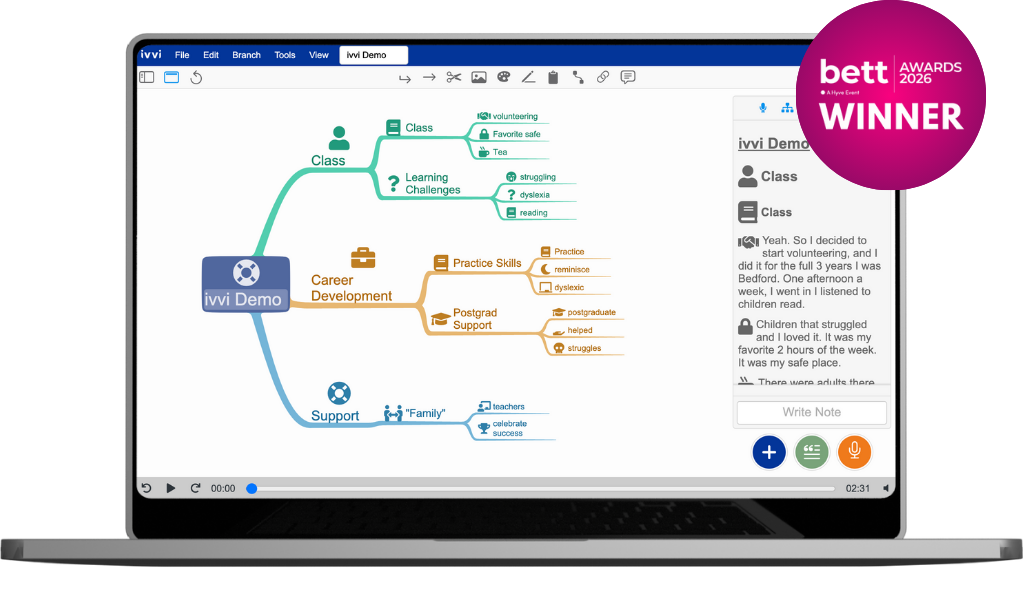
Everything is there. Nothing is deleted. It's up to the student to prioritise, highlight, and edit their notes as they go. While listening, they have four buttons:
- Skip. This bit isn't relevant right now, move on.
- Map. Capture the keywords, keep it in the map.
- Quote. Pull the exact words into the branch for easy reference later.
- Highlight. The highest level: maps it, quotes it, marks it so you can filter back to your key moments.
Highlighting, filtering, choosing what to keep. That's not staying busy in the lecture. That's how you learn. ivvi keeps students in that process instead of skipping past it.
What the Bett Judges Saw
In a year when AI in education is under intense scrutiny, the Bett judges chose ivvi. An AI tool that deliberately keeps students in control of the learning process.
They said:
"The judges were particularly impressed by ivvi. A problem driven technology designed to support dyslexic learners at all stages of learning. Its AI powered transcription feature automatically records lectures, creates notes, and generates mind maps and visuals, making information more organised and accessible."
ivvi is the first AI-native product to win in the SEND category in its 15-year history. Most AI softwares that are approved are for administrative tools such as marking, planning and behind-the-scenes operations. ivvi is one of only two to have been recognised for student-facing learning tools.
The judges didn't choose AI that gives answers. They chose AI that helps students think.
Why This Matters Now
The government is right to be cautious. AI in education could go badly wrong. If we build tools that do the thinking for students, we're not helping them learn. We're teaching them to outsource cognition.
But AI can also go brilliantly right. If we build tools that remove barriers, reduce anxiety, and clear the path for students to do their own thinking, we unlock potential that was previously trapped.
For students with dyslexia, the barrier isn't intelligence. It's processing. Walls of words collapse on them. They can't keep up with the speed of speech. By the time they've written one sentence, the lecturer has moved on.
ivvi removes that barrier. The audio is captured. The transcript is there. The mind map is building. Now they can actually listen. They can think. They can choose what matters visually, in a language they can process quickly, not words.
The thinking is still theirs.
The Philosophy
There's a difference between AI that does the work and AI that clears the path.
AI summaries do the thinking for you. ivvi removes the anxiety so you can do the thinking yourself, visually, and you leave with the notes you need, ready.
Other AI tools hand you finished notes. ivvi hands you a map and says: Find your route.
That's why we won. And that's the kind of AI we need in education.
ivvi: Visual Notes for Visual Minds.
If you want to see AI that helps students think rather than AI that thinks for them, visit ivvi.app or get in touch at [email protected].
Stay connected with news and updates!
Join our mailing list to receive the latest news and updates from our team.
Don't worry, your information will not be shared.
We hate SPAM. We will never sell your information, for any reason.
